Painting
Interior and Exterior Painting
Interior rooms, siding, trim, fascia and deck stain, prepped and masked before a brush comes out.
Peeling paint is rarely a paint problem
On older Indianapolis houses the trouble shows up first on the south and west walls: paint lifting along the bottom edge of the siding, chalk that comes off on your hand, fascia boards flaking right where the gutter overflows. In Carmel and Fishers, newer builds can show it too, usually around window trim where the caulk has pulled away and let water in behind the paint.
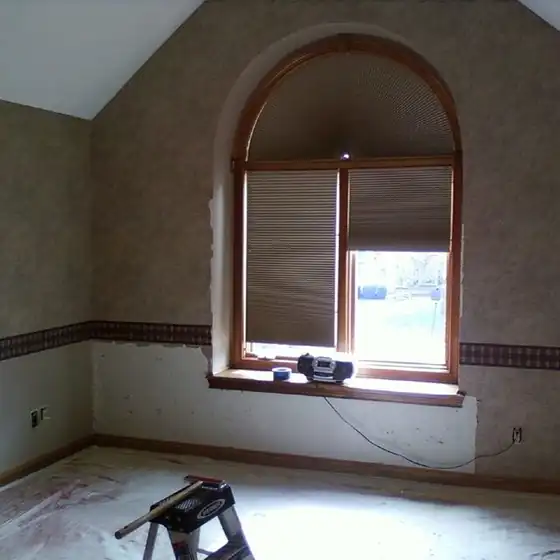
Inside, it looks different. A water stain that bleeds through every fresh coat, a wall that holds fingerprints, a wallpaper border and a row of patched nail holes that still show through. Each of those traces back to what was or wasn't done before the first coat went on, not to the paint in the can.
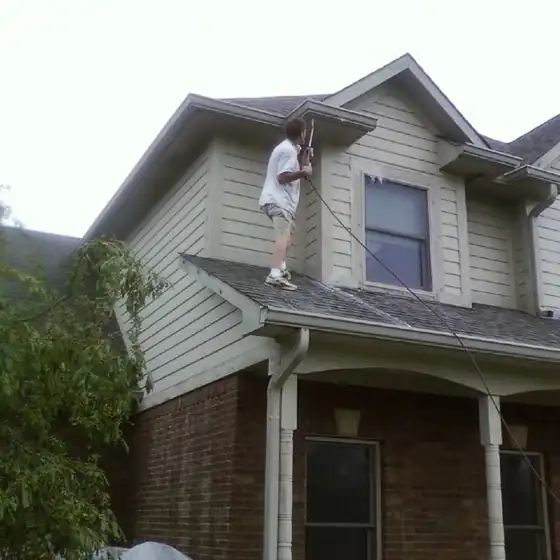
A painter working on the upper wall of a two-story house exterior from a ladder
Scrape, prime, caulk, then two coats
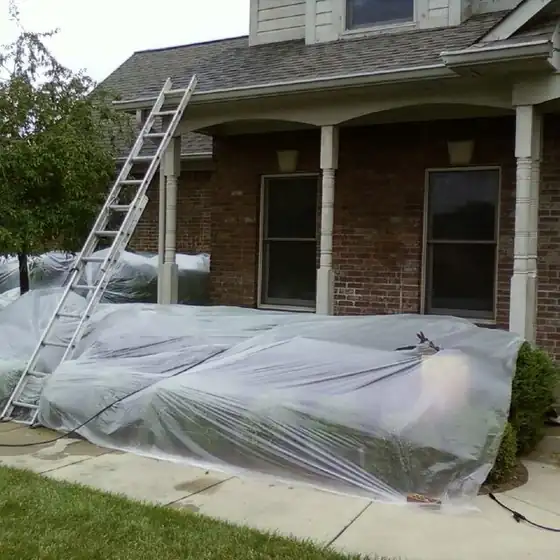
Outside, the house gets masked first: plastic over the shrubs and the porch floor, ladders set, brick and glass covered. Loose paint comes off with scrapers and a wire brush, and the edges get sanded so the new coat doesn't print the old ridge. Bare wood gets primed before anything else touches it. If the siding is chalky, dirty or carrying mildew, I wash it first, and the hot water rig on my trailer exists for exactly that.
Gaps around windows and trim get caulked, which is the same work as my window caulking line item. Then two coats go on, trim and fascia brushed, siding rolled. Decks follow the same logic: clean the boards, let them dry, then stain across the rails, steps and flat boards in one pass so the color matches.
Inside, floors and furniture get covered, holes and cracks get patched and sanded flat, and stains get sealed so they stay put. Edges are taped and cut in by hand. I hold a lead renovations certification, which is worth knowing if your house is older.
Touch up the small stuff, repaint on your schedule
Good paint doesn't mean you never look at it again. Walk the house once a year. Check the caulk lines at windows and doors, the bottom edge of the siding, and the flat tops of fascia, rails and deck boards where water sits. A cracked caulk line caught early is a small fix. Left alone, it is a rotted board.
If a board has gone soft, painting over it only hides the problem for a season. That is carpentry, and I handle it before the paint goes on. I'm licensed as a general contractor with the Indianapolis Metropolitan Plan Commission and Building Authority, so the person walking your house is the one on the license, and 317-850-6427 reaches me directly.
The Residential Handyman — Licensed, bonded and insured general contractor. Call 317-850-6427.
The paint side of the trailer
Paint, stain, caulk: the whole list
Four jobs sit under painting on my service list. Three more get booked right alongside them, because a good paint job usually starts with one of them.
What this covers
- Interior painting
- Exterior painting
- Deck staining
- Window caulking
Often booked with it
- Power washing
- Gutter cleaning and guard installations
- Drywall repairs and installation
The wash step is its own service, set out on the hot water power washing page.
Next door on the list
- Carpentry and rot repair
For boards that have gone soft under the paint.
- Roof repairs and gutters
For the fascia and gutter line that sheds water onto siding.
- Drywall and garage finishing
For walls that need patching before a color goes on.
Want to see finished work first? The gallery has the jobs, and the contact page is where you describe yours.