How to Find Wood Rot on Fascia and Porch Headers Before It Spreads
Rot rarely announces itself, so a screwdriver and twenty minutes on a dry day will tell you more than a glance from the driveway.
October 20, 2026 · 4 min read
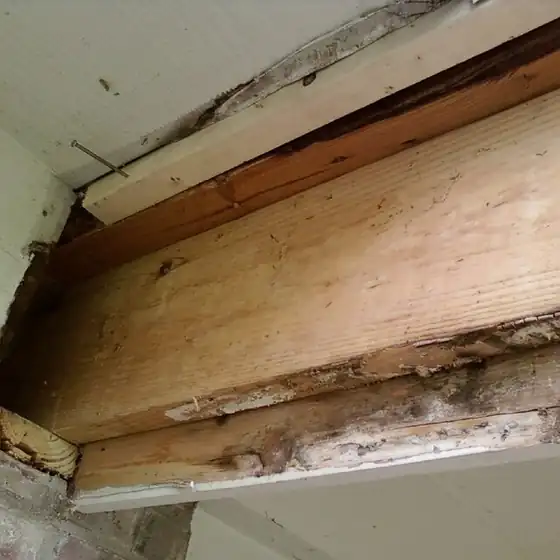
Wood rot on the outside of a house is almost always a water story. Somewhere, water is landing on a board, or running behind it, or sitting in a seam, and the board never gets the chance to dry out. By the time paint bubbles or a corner goes soft, the damage has usually been building for years. The good news is that the spots where it starts are predictable, and you can check them yourself in an afternoon.
Where rot likes to start
Gutters are the number one culprit. When a gutter clogs with maple seeds, oak leaves or shingle grit, water backs up and spills over the front or sneaks behind the back edge, soaking the fascia board that the gutter hangs from. In the Indianapolis area, with plenty of mature trees in places like Broad Ripple, Zionsville and Beech Grove, that happens every fall for plenty of homeowners.
Next up are the places where a roof edge, a wall and a trim board all meet. Porch headers, the horizontal beams over a porch opening or across the top of a porch post, take water from above and from splash below. Bottom edges of trim boards sit on or near flat surfaces that hold water. And any cut end of wood, where the grain is exposed, drinks moisture like a straw if it was never sealed or painted.
Start with your eyes, then your hands
Walk the house in daylight. Look up at the fascia and soffit along every roofline. You're looking for paint that is peeling, blistering or showing dark streaks, boards that have sagged or wavy edges, and gutters that are pulling away. Black or gray staining below a gutter seam often means that seam leaks.
- Peeling or bubbling paint in a patch, especially along a bottom edge or a joint
- Dark water staining or green growth on the board
- A board that looks swollen, wavy or slightly crumbled at the corners
- Small holes or fine sawdust-like material, which can mean insects are in the wood
- A gap between a trim board and the wall that has opened up
How to probe wood without making things worse
Grab a flathead screwdriver or an awl. Press the tip into the board, with firm hand pressure, not a hammer swing. Sound wood pushes back and the tip leaves only a tiny dent. Rotted wood gives way, feels spongy, or comes up in soft stringy chunks. Check several spots along the board, not just one, and work both toward the problem area and away from it so you can see where good wood begins.
Pay extra attention to corners, joints, the underside of porch headers, and any place a fastener head has rusted. Be careful on ladders. If the fascia is high or the roof is steep, leave the probing to someone who works at heights every day.
Why a repair has to cut back to sound wood
A common shortcut is to dig out the soft part, fill the hole with putty and paint over it. It looks fine for a season. Meanwhile, the rot fungus is still alive in the surrounding wood, and as long as it has moisture, it keeps going. A real repair removes the damaged section until the wood underneath is firm and dry, then replaces what was removed.
For a small area, that might be a patch of new material fitted into the cut-out. For a board that is soft along most of its length, it means replacing the whole board. On a structural piece like a porch header, the work gets more involved, because the beam may be carrying weight. That's a job for an experienced carpenter, who will often support the load while the bad section comes out.
Fix the water, or the repair won't last
Replacing rotted wood without fixing why it rotted is just setting up the same job again. After the repair, the new wood needs all faces and cut ends primed and painted, including the back side and ends nobody will see. The gutter that caused it needs cleaning, and possibly re-hanging so it pitches correctly toward the downspout. Flashing and caulking at the joints should be checked too. A tiny gap that lets water behind a header will undo a nice repair quickly.
If you have been putting off a look, fall is a decent time to do it, since leaves have just clogged things and the damage shows. Take photos as you go. They help when you describe the problem on the phone.
When to call for help
If a board gives way under the screwdriver, if a porch header sags, or if you can push through the wood and see daylight or insulation, stop poking and get a professional look. The Residential Handyman lists carpentry among its services, and Mike says he does all of his own work, so the person who walks your roofline and probes your fascia is the person who fixes it. Have a look at the services page for the full list, or call 317-850-6427 and describe what you're seeing.
The Residential Handyman, 317-850-6427
Call 317-850-6427More articles
Hot Water vs Cold Water Pressure Washing: What Actually Cleans Your Siding
Pressure is only one third of a good exterior wash, and the other two thirds are heat and the right cleaner.
Licensed, Bonded and Insured: What Those Words Mean When You Hire Help
Three words show up on nearly every contractor's van, and they mean three different things worth checking before anyone starts work.