Licensed, Bonded and Insured: What Those Words Mean When You Hire Help
Three words show up on nearly every contractor's van, and they mean three different things worth checking before anyone starts work.
October 20, 2026 · 4 min read
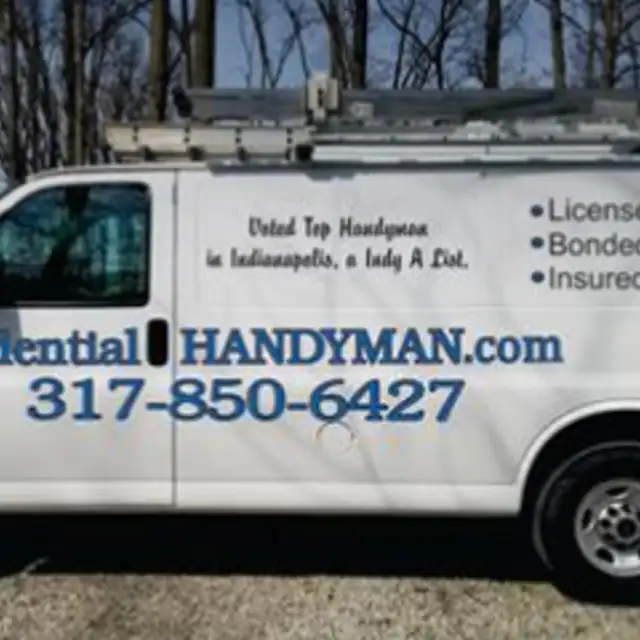
Drive around Fishers or Avon on any weekday and count the work vans. Most of them carry some version of the same phrase: licensed, bonded, insured. It's easy to read past it, like the word fresh on a grocery label. But each of the three words points at something different, and each one gives you something specific to ask about. Here's what they mean in everyday terms, using one local contractor's credentials as a real example.
Licensed: someone official knows who this person is
A license is a credential issued by an authority that has looked at the person doing the work. Licensing rules differ by trade, by city and by county, and this post isn't going to tell you what applies to your project. What you can do is ask the simple question: what license do you hold, and who issued it?
As an example, Mike, who runs The Residential Handyman in Indianapolis, says on his credentials page that he holds a general contractor's license with the Indianapolis Metropolitan Plan Commission and Building Authority. His page also points out that the license holder is the one doing the work, rather than a subcontractor. That detail matters, because on some jobs the name on the truck and the person on your roof aren't the same.
Bonded: a third party stands behind a promise
A bond is different from insurance, and people mix them up. A surety bond involves three parties: the contractor, the company that issues the bond, and the party protected by it. The idea is that a financial backer has agreed to stand behind the contractor's commitments, up to some amount, under certain terms. Those terms vary a lot from one bond to the next, so the useful questions are who issued it and what it actually covers.
In Mike's case, his credentials page says he has a Mutual Surety Bond with Western Surety Company. If you wanted to dig further, you'd ask him for the bond paperwork and call the surety company to confirm it's current. A good contractor won't blink at that request.
Insured: what happens if something goes wrong
Insurance is about accidents. A ladder slips and cracks a window. A tool drops through a ceiling. A worker gets hurt on your property. General liability and workers' compensation policies exist to pay for those situations, so the cost doesn't land on your homeowner's policy or in your lap. The questions to ask are what kinds of coverage the contractor carries, and whether you can see a current certificate of insurance from the insurer.
Mike's credentials page says he holds a policy that has been in effect for over thirty years and has never had a claim against it. That's his statement, and it's the kind of long track record worth asking a contractor to talk through. Still, the certificate is what you'd want in hand, because it names the carrier and the dates.
How the three fit together
Think of it as three different kinds of reassurance. The license says an authority recognizes this person as a contractor. The bond says a financial backer stands behind the commitments. The insurance says there's a plan for accidents. Any one of them alone leaves a gap, which is why a contractor who can show all three is giving you more to work with. None of them replaces a clear written estimate, a straight conversation about the scope, and your own sense of whether this person shows up and does what they said.
Questions to ask any contractor
- What license do you hold, and which office issued it?
- Can I see the bond and the name of the company behind it?
- Can you send me a certificate of insurance, and what does it cover?
- Who will actually be doing the work on my house?
- Will you give me a written estimate, and what does it include?
- How long have you been working in this area, and can you show me similar jobs?
Notice that a few of those get at something the three words can't: who is physically on the job. Mike's directory description says he does all of his own work, so you can be confident you are benefitting from his years of experience. He's been serving Central Indiana since 1990. That's worth weighing alongside any paperwork, because paperwork shows what's on file and experience shows what's been done.
Check, then trust
You don't need to turn a hallway repair into an investigation. But for a bigger job, such as a bathroom remodel or work on a roof edge, a few minutes of verification is cheap. Ask for the documents, look them up with the issuers, and keep copies with your records.
If you'd like to see how one contractor lays out his credentials, the credentials page on this site walks through them. Questions about any of it are welcome at 317-850-6427.
The Residential Handyman, 317-850-6427
Call 317-850-6427More articles
Hot Water vs Cold Water Pressure Washing: What Actually Cleans Your Siding
Pressure is only one third of a good exterior wash, and the other two thirds are heat and the right cleaner.
How to Find Wood Rot on Fascia and Porch Headers Before It Spreads
Rot rarely announces itself, so a screwdriver and twenty minutes on a dry day will tell you more than a glance from the driveway.