Hot Water vs Cold Water Pressure Washing: What Actually Cleans Your Siding
Pressure is only one third of a good exterior wash, and the other two thirds are heat and the right cleaner.
October 20, 2026 · 4 min read
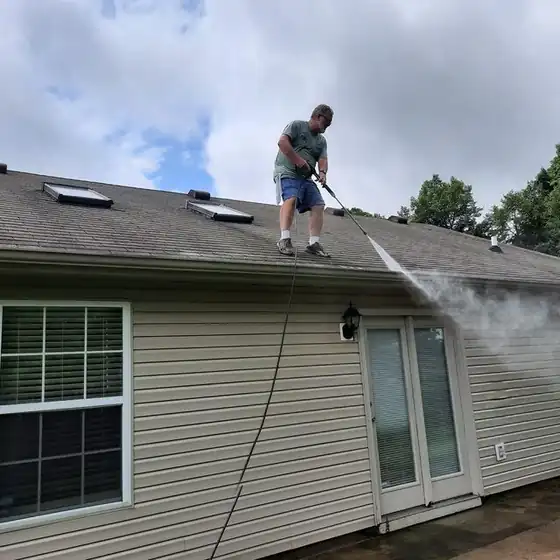
Most people think a pressure washer is about force. Point the wand, squeeze the trigger, watch the green fall off. That works for a while, but anyone who has washed a north-facing wall in Carmel or Greenwood knows the green comes back. Sometimes it comes back in a season. The reason is that blasting a surface with cold water mostly moves the dirt around, and it leaves plenty of what grows the dirt behind.
What cold water does well, and where it stops
Cold water at high pressure is good at knocking loose anything that is just sitting on a surface: dust, pollen, loose cobwebs, a layer of road grime. For a lightly dirty concrete walk, it may be all you need. The trouble starts with things that are stuck on or growing in. Mold, mildew and algae put down roots in the pores of siding, wood and concrete. Oily film from cooking exhaust, tree sap and vehicle drips bonds to the surface. Cold water slides over those. To get them off, you either turn the pressure way up or you scrub for a long time.
Turning the pressure up is where homes get hurt. Gouged cedar, furred-up wood grain, water forced behind lap siding, and etched stripes in a driveway are all signs of a washer set too hard for the job. Force is the blunt tool.
What heat adds
Hot water changes the chemistry of the job. Warm water loosens oils and greases that cold water can't touch, and it helps a cleaning solution do its work faster. It also lets you get a surface clean at a gentler pressure, which is easier on paint, wood and older mortar. Think about washing a greasy skillet. You can run cold water over it all day, or you can use hot water and soap and be done in a minute.
The Residential Handyman runs what his power washing page calls a Hot Water Pressure Washing System, a custom mobile machine that brings the heat to your driveway rather than relying on your outdoor spigot. He describes it as a way to clean a home's exterior, and the same machine handles sheds, fences, decks, driveways and sidewalks.
Why the cleaner matters as much as the water
Water alone, hot or cold, doesn't deal well with biological growth. A good exterior wash uses a cleaning solution that is meant to break down mold, mildew and algae, and it gives that solution a little time to work before it gets rinsed away. Mike's page describes his formulated house cleaner as one that kills, cleans and inhibits mold and mildew growth, and he says it is a proven disinfectant, sanitizer and fungicide. Those are his claims, and it's fair to ask any washer what is in the product they use and how it's applied around your plants.
One more thing worth knowing: his page says the cleaner works immediately, even before the hot water goes on. That matches how cleaners generally behave. Soak time does a lot of the labor, and the pressure rinse is the finishing step.
Surface by surface: siding, decks and driveways
Siding collects algae on the shaded sides of the house and dirt streaks under gutters and eaves. Vinyl, aluminum and painted wood all clean best with a cleaner, moderate pressure and a good rinse from the top down so streaks don't dry on the clean sections. Watch for open window screens, loose siding and caulk that has failed, because water finds those spots.
Wood decks need the most care. Softwood can be scarred by a narrow, hard spray, and a deck that gets scored will hold water and look worse than it did before. Cleaning a deck properly usually means a wide fan, a cleaner, and sometimes a brush. If you're planning to stain, washing first matters, because stain bonds to clean wood and not to a film of mildew.
Concrete driveways and sidewalks hold oil, rust and algae. Hot water helps lift the oily spots. Asphalt is a different story: it's softer, and aggressive washing can scar it, so ask before anyone points a hard spray at a blacktop drive.
What the Rain Coat finish is meant to do
After the wash, Mike offers what he calls a Rain Coat, a formulated exterior finish. According to his page, it causes water to bead up and run off right away, which inhibits dirt buildup, and it adds protection from the weather and increases luster. He also describes it as guaranteed protection from Indiana's harsh weather. Ask him what that means in practice for your surface and your house, since results depend on the material underneath.
What to ask before anyone washes your house
- Is the water hot, and what pressure will you use on my siding?
- What cleaner do you use, and how do you protect my plants and shrubs?
- How do you handle windows, screens and door gaps?
- Do you cover landscaping with plastic, and is that part of the quote?
- How do you price: by square footage, by material, by how dirty it is?
That last question has a real answer here. Mike says he quotes based on the size of the home, shed, fence, deck or driveway, the type of material, how heavy the soil is, how much cleaner and Rain Coat it takes, covering vegetation, brushing, and labor to get access. If you want to see how it works on your place, read the hot water power washing page, then call 317-850-6427 for a free estimate.
The Residential Handyman, 317-850-6427
Call 317-850-6427More articles
How to Find Wood Rot on Fascia and Porch Headers Before It Spreads
Rot rarely announces itself, so a screwdriver and twenty minutes on a dry day will tell you more than a glance from the driveway.
Licensed, Bonded and Insured: What Those Words Mean When You Hire Help
Three words show up on nearly every contractor's van, and they mean three different things worth checking before anyone starts work.