When to Sealcoat a Blacktop Driveway, and What to Expect
A faded gray driveway isn't an emergency, but it is telling you something about what the weather has been doing to it.
October 20, 2026 · 4 min read
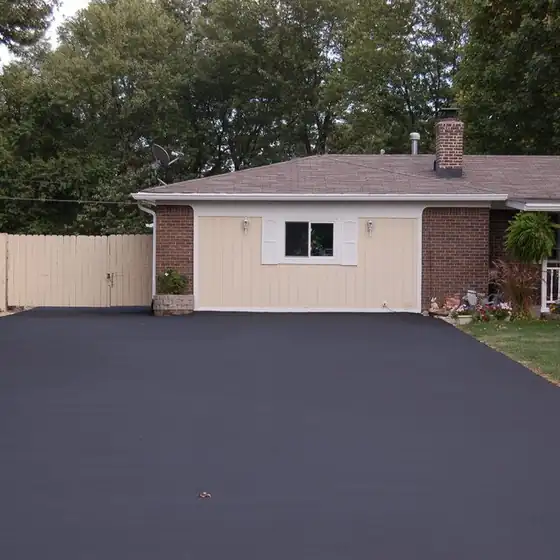
Fresh blacktop is deep black. Over the years it fades to charcoal, then to a washed-out gray, and the surface starts to look rough and thirsty. That color shift is the oils in the asphalt binder wearing off under sun, rain and road salt. Sealcoat is a thin, dark protective layer meant to slow that process down. Done at the right time, it makes a driveway look sharp and helps it handle another run of Indiana winters. Done at the wrong time, on the wrong driveway, it's a coat of black paint over a bigger problem.
Signs your driveway is ready
- The color has faded from black to a medium or light gray across most of the surface
- The top looks dry and coarse, and small stones are starting to show and loosen
- Hairline cracks are appearing, especially along edges and where the drive meets the garage apron
- Water soaks in and darkens the surface, rather than beading up and running off
- Oil and fuel spots have softened the asphalt in the places where cars sit
If you see two or three of those, you're likely in the window where sealcoat does the most good. If the pavement is mostly black and in decent shape, it can usually wait.
When sealcoat is the wrong answer
Sealcoat is a surface treatment, not a structural repair. If your drive has potholes, sunken areas, wide cracks you can slide a finger into, or a pattern of connected cracks that looks like alligator skin, the base underneath has a problem. Coating over those hides them for a few weeks and doesn't fix them. In those cases the right order is repair first, then seal, or sometimes the driveway needs more than a sealing job. A contractor who looks at your drive honestly and tells you that is worth keeping around.
What good prep looks like
Most of what makes a sealcoat job last happens before any black goes on. The surface has to be clean. That means sweeping or blowing off loose dirt, pulling weeds from edges and cracks, and washing away embedded grime. Oil spots usually need special treatment so the coating can grip. Cracks get filled with a crack filler suited for asphalt, because sealcoat on its own won't bridge them.
Ask any contractor how they prep. Vague answers like we clean it up are a flag. You want to hear about cleaning, crack filling, oil spot treatment and edging against lawns, garage doors and walkways so the coating doesn't end up where it doesn't belong.
What the day looks like
Weather decides a lot. Sealcoat needs dry pavement, and it cures best when the day is mild with no rain coming. In Central Indiana, that tends to mean spring through early fall, and a contractor may move your appointment around a forecast. That's a good sign, not a nuisance. Putting the product down just before a storm or on a damp or very cold surface is how you end up with a patchy finish.
Expect to have the driveway closed. You'll need to move cars out beforehand, and you'll want the family, the mail carrier and the dog to know it's off-limits. Sprinklers should be off. If your garage floor is lower than the apron, mention it, so the crew can keep product from running in.
Keeping cars off while it cures
This is the part people rush. Sealcoat may look dry on top long before it's ready to carry weight. A car driven on too soon can leave tire marks, scuffs or tracks, and turning the steering wheel while the car is parked can twist the surface. Your contractor will tell you when it's safe, and the answer depends on the product, the temperature and the humidity. Ask them directly, and ask for it in writing or in a text if you want a reminder.
In the meantime, park on the street and let neighbors know. Plan around trash day, deliveries and anyone who might pull in out of habit. A couple of sawhorses or a bit of tape across the entrance goes a long way.
How often, and what to do between coats
There's no single schedule that fits every driveway. Traffic, shade, drainage and the age of the asphalt all change how fast it wears. Rather than sealing on a fixed calendar, go by what you see: color, texture and cracks. Between coats, keep leaves and debris cleared, fill new cracks when they appear, and clean up oil spills quickly.
The Residential Handyman lists blacktop sealcoating on its services page, and Mike does the work himself. A short look at the drive, a conversation about what shape it's in, and a written estimate is how it usually begins. Call 317-850-6427, or check the photo gallery to see finished driveways before you decide.
The Residential Handyman, 317-850-6427
Call 317-850-6427More articles
Hot Water vs Cold Water Pressure Washing: What Actually Cleans Your Siding
Pressure is only one third of a good exterior wash, and the other two thirds are heat and the right cleaner.
How to Find Wood Rot on Fascia and Porch Headers Before It Spreads
Rot rarely announces itself, so a screwdriver and twenty minutes on a dry day will tell you more than a glance from the driveway.